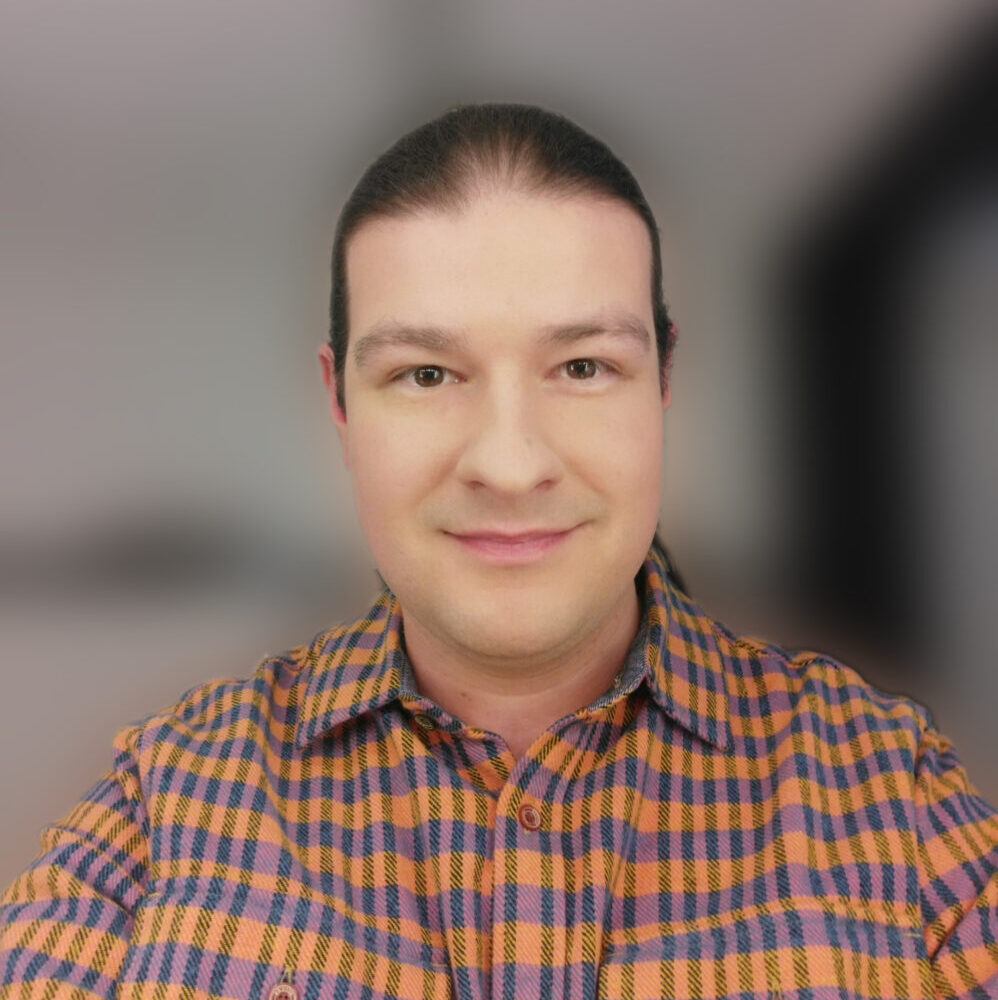
I’m a 20-year-old Italian guy, autistic, living in a small town in the province of Milan. To be completely honest, my relationship with autism today is rather neutral: I don’t see it as an obstacle, nor as a central element of my daily life. It no longer affects how I socialize or the activities I do each day like it used to.
Over the years, I’ve cultivated many passions: the cosmos, trains, airplanes, music. Today, however, two interests occupy most of my time: flying airplanes (preferably commercial ones, though I’m fascinated by all kinds) and electronic music, especially EDM (Electronic Dance Music). Music is my “secret language,” the most authentic way I have to express myself.
My first autism diagnosis came at the beginning of third grade. Even before that, my teachers had noticed some difficulties, but they seemed to be waiting for some kind of “magic wand” to fix everything on its own. In the end, they decided to have me repeat the year. Telling this to thousands of people online is a bit embarrassing, even though I know very well it wasn’t my fault.
I believe my autism shows mostly in how I memorize information. At school, I always struggled more than others to remember outlines and summaries. It was hard for me to memorize historical events, like the adventures of certain leaders, or mathematical equations—but let’s be honest, who really remembers those? From the first day of school, I realized my brain “creaks” a bit when it comes to memorization.
Another difficulty is socializing. From the first day of middle school, I found myself in a complicated situation. My classmates chatted among themselves, firing off jokes, while I preferred talking to the educator, who immediately seemed friendly to me. From that moment on, I often chose to be alone. After three years, my ability to relate to peers was quite limited. Over time, I lost the habit of socializing, also due to a lack of shared interests.
In high school, things slowly changed. The first year was similar to middle school, but in the second year something important happened: I met a girl with whom I developed a more spontaneous relationship than with others. Over the next four years, she helped me a lot to improve my social skills. Even today, building connections remains a challenge, but I’ve come to understand that my difficulties aren’t flaws—they’re simply part of who I am. When I meet someone truly willing to listen, I can show who I am.
During high school, I had teachers who never gave me the chance to choose the study method that worked best for me. I believe learning shouldn’t be uniform: you can’t force everyone to use the same approach, as if we all had the same brain. Every student should be able to express their best through the strategies they find most effective. Only then can we talk about true inclusion.
Some teachers, in an effort to include me, always made me work in groups. I understand the good intentions, but doing it every day becomes exhausting. After nine months, you lose enthusiasm for it. You learn better when you have the freedom to choose your own study and memorization method.
I’ll end by saying that to me, #AutismNotInvisible is a truly wonderful initiative, and it’s very important to help the world understand autism—to “give it a voice” (to give autistic people a voice).